
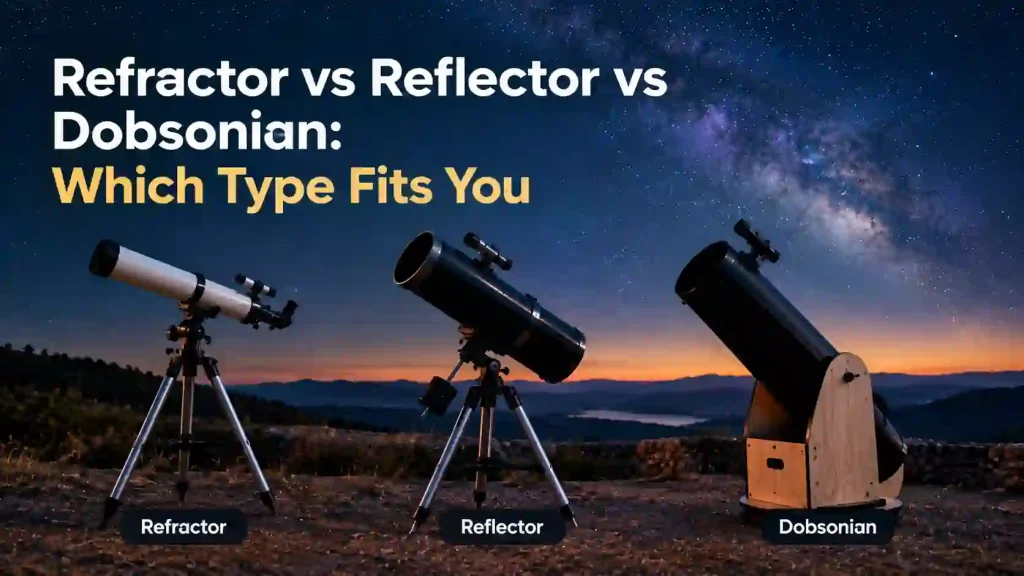
Refractor vs Reflector vs Dobsonian: Which Type Fits You
How refractors, reflectors and Dobsonians differ in optics, upkeep and portability, and which telescope type actually suits a beginner’s first purchase.
How refractors, reflectors and Dobsonians differ in optics, upkeep and portability, and which telescope type actually suits a beginner’s first purchase.
What actually matters when choosing a first telescope, aperture and mount, what magnification claims hide, and when binoculars are the better first buy.
The unwritten rules of a dark sky site or star party, from white light and headlights to phone screens and other people’s telescopes, and why each exists.
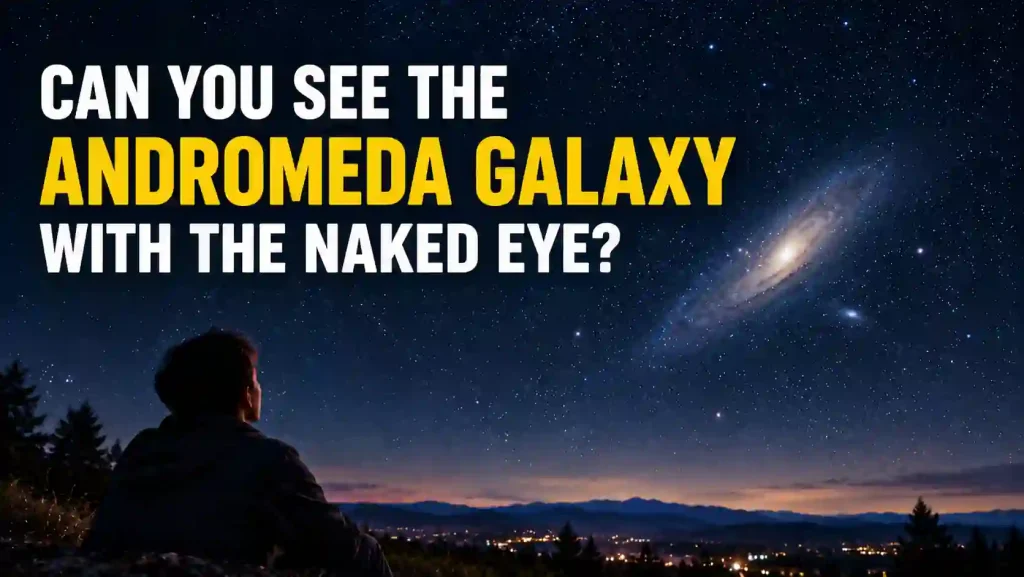
Yes, from a dark enough sky. Here is what the Andromeda Galaxy really looks like to the naked eye, how dark your sky must be, and how to find it.
Yes, a modern phone can capture the Milky Way, with real limits. Settings, timing, and the honest truth about what a phone can’t do that a camera can.
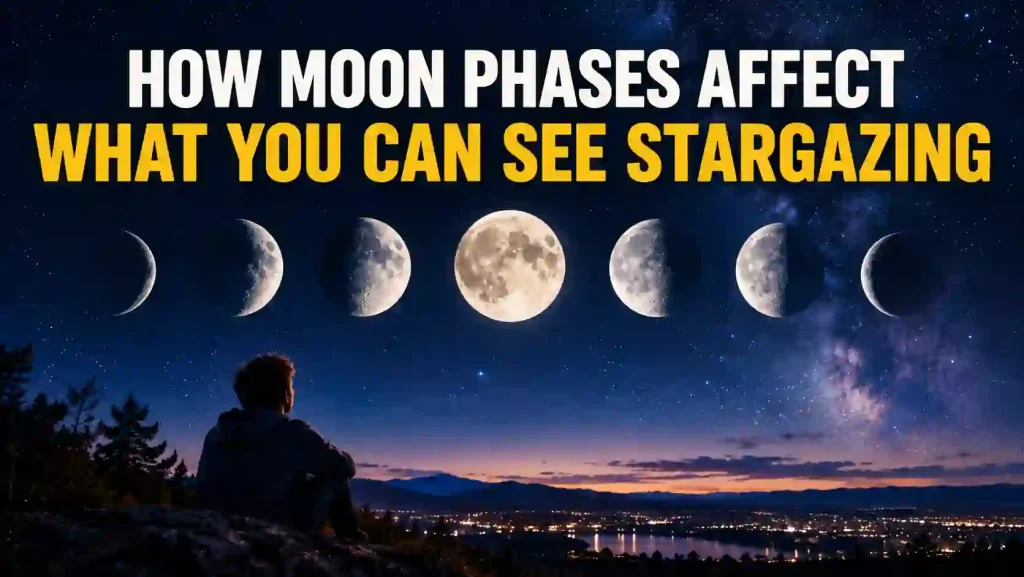
New moon isn’t always an option. Here’s exactly how each moon phase changes what’s visible, and what to do on the nights you can’t pick.
You don’t need to drive anywhere. Here’s exactly what’s visible from a city sky, by Bortle class, and how to see more of it tonight.
The core is up for months, but only truly visible in a narrow window. Here’s when, and the dark-sky threshold most guides leave out.
ISS pass times change constantly. Here’s how predictions actually work, and how to get today’s real prediction from NASA’s own Spot the Station tool.
NASA calls the ISS the third brightest object in the sky. Here’s how to get exact pass times and tell it apart from a plane or satellite.