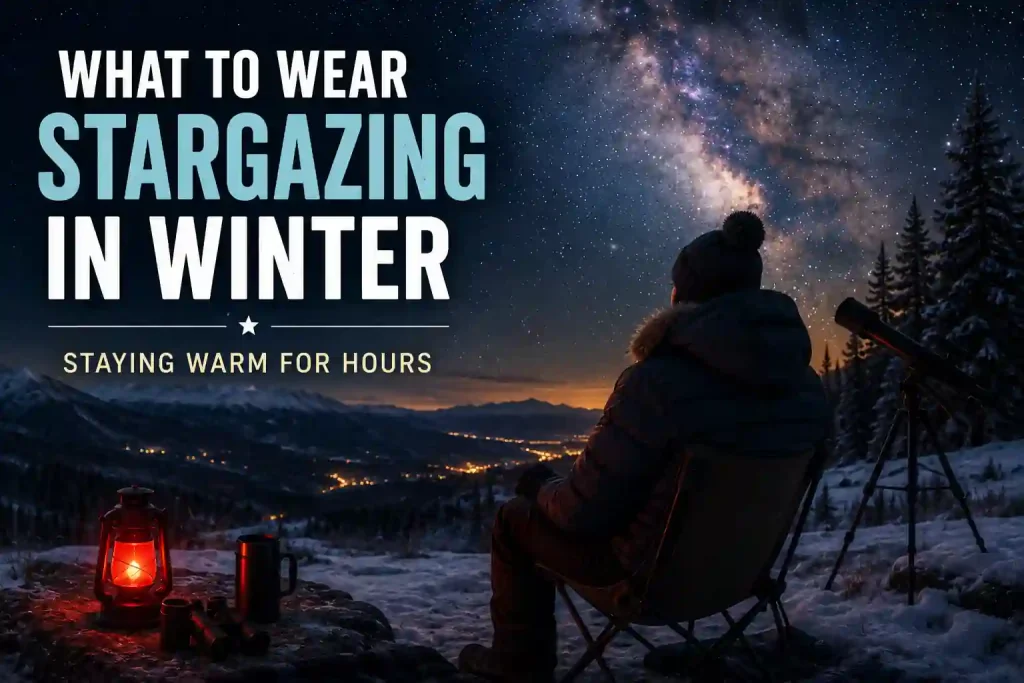
Winter stargazing runs cold faster than most other outdoor winter activities for one simple reason: you're standing still, not moving. Hiking or skiing generates body heat through motion; stargazing asks you to stay in one spot for 20 to 30 minutes just to let your eyes adapt to the dark, then stay put longer to actually observe. That changes what "dressing warm" means. This guide covers the layering system built for stillness, the parts of your body that get cold first, and the real warning signs of frostbite and hypothermia from official U.S. sources, so a cold night doesn't cut your session short, or become dangerous.
Why Stargazing Is a Different Kind of Cold
Most winter-activity clothing advice assumes you're generating heat through movement. Stargazing removes that variable almost entirely. Once you commit to letting your eyes adapt to the dark, per the science covered in our guide to dark adaptation and red light, you're standing or sitting still for a real stretch of time, and every extra minute you spend cold is a minute you're tempted to cut the session short right when your eyes are finally seeing the most.
The practical result: clothing that feels adequate for a 20-minute walk to the car can leave you shivering an hour into a stargazing session. Plan to overdress rather than underdress.
The Layering System That Actually Works
Three layers, each with a distinct job, beat one thick coat:
Base layer (against your skin). Its job is moisture management, not warmth by itself. A layer that traps sweat against your skin makes you colder over time, not warmer, because damp fabric pulls heat away from your body.
Insulating layer (the warmth). This is where actual heat retention comes from: a fleece, a wool sweater, or a puffy mid-layer that traps warm air close to your body. For standing-still activities like stargazing, err toward more insulation than you'd bring for an active winter outing.
Outer layer (wind and moisture barrier). Wind is what turns a merely cold night into a genuinely dangerous one. According to the National Weather Service's own wind chill guidance, wind chill measures how quickly exposed skin loses heat from the combined effect of cold air and wind. As one official example states, an air temperature of 0°F with a 15 mph wind produces a wind chill of about -19°F, cold enough that exposed skin can freeze within 30 minutes. A windproof outer shell is not optional once temperatures drop and you're standing still in the open.
The Parts That Get Cold First
According to the CDC's official winter-weather guidance, the body parts most affected by extreme cold are the nose, ears, toes, cheeks, chin, and fingers: the extremities, not the torso your coat is protecting. For a stationary activity like stargazing, prioritize these specifically:
- Hands. You'll be handling a phone, a red flashlight, or binoculars, which makes bulky mittens impractical but thin gloves inadequate. Thin glove liners under a removable outer mitten let you expose fingers briefly for fine tasks, then cover them again.
- Feet. Standing on cold ground loses heat fast through direct contact. Insulated, waterproof boots and a warm sock layer matter more here than almost anywhere else.
- Head and face. A hat that covers your ears is one of the single highest-value items you can add, since heat loss through an uncovered head and ears is significant and easy to fix cheaply.
Know the Warning Signs
This is not a scare tactic; it's official guidance worth actually knowing before you commit to an hours-long session in the cold.
Frostbite happens when skin actually freezes, and per the NWS, it requires real air temperatures below freezing (wind chill alone, without freezing air temperatures, does not cause frostbite). The NWS's own example (a 15 mph wind at 0°F producing skin-freezing conditions in as little as 30 minutes) shows how fast this can happen once air temperature is genuinely below freezing and wind is added.
Hypothermia is a drop in core body temperature and, per the CDC, can happen even above freezing if you get chilled from wind, moisture, or being under-layered for long enough. The CDC lists the warning signs in adults as shivering, exhaustion, confusion, fumbling hands, memory loss, slurred speech, and drowsiness, and notes that if shivering has stopped even at low temperatures, or the person seems confused or disoriented, it's a medical emergency requiring immediate attention.
The CDC's own three-step framework is worth remembering for any long winter session: avoid (dress in warm layers, cover exposed skin, limit time outdoors, stay dry), spot (know the warning signs above), and treat (get warm, dry, and seek help if symptoms appear).
What to Bring Besides Clothes
- Insulated seating. A cold camp chair or the ground itself pulls heat out of you the entire time you sit on it. An insulated pad or chair with a solid seat back makes a real difference over an hour-plus session.
- A hot drink in an insulated bottle. Not essential, but it helps morale and gives your hands something warm to hold between observing.
- Hand warmers. Cheap, small, and specifically useful for the hands-and-fingers problem described above.
- A backup layer in the car. If you underestimated the cold, having a spare layer within reach means you don't have to end the session early.
For the rest of what to pack beyond clothing, see our full stargazing checklist.
Frequently Asked Questions
How cold is too cold to stargaze?
There's no fixed cutoff: it depends on your layering, the wind, and how long you plan to stay out. The NWS's wind chill guidance is the tool to check before you go: look up the wind chill for your conditions, not just the air temperature, since wind can turn a merely cold night into one where exposed skin is at real risk.
Do I need special winter boots?
You need insulated, weatherproof footwear if you're standing on cold or snowy ground for an extended session. Regular sneakers lose heat fast through direct ground contact. You don't need anything astronomy-specific, just genuine winter footwear.
How long can I realistically stay out in winter?
That depends on temperature, wind, and how well you're layered, not a fixed number. Watch for the CDC's warning signs (shivering that won't stop, or shivering that suddenly stops, confusion, fumbling hands) as your actual signal to head inside, rather than picking an arbitrary time limit in advance.
Does driving to a dark site make the cold worse?
Often yes, since dark-sky sites are typically rural and more exposed to wind than a sheltered backyard. If you're planning a trip to a dark sky site in winter, dress for the more exposed, colder location, not for the drive there.