
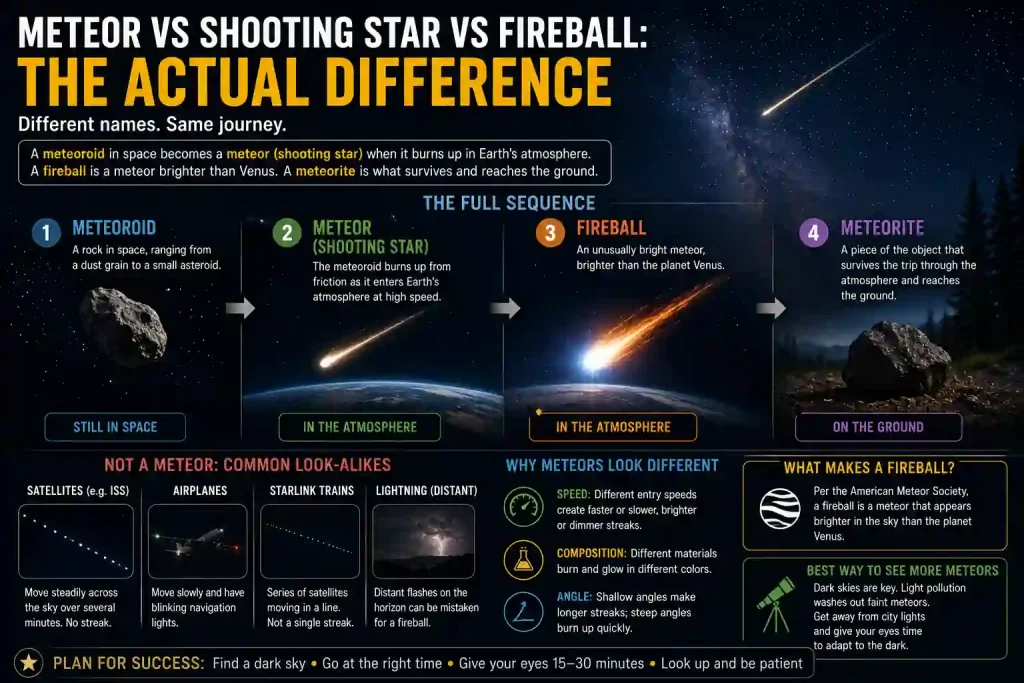
Meteor vs Shooting Star vs Fireball: The Actual Difference
Meteor and shooting star are the same thing. Here’s the full meteoroid-to-meteorite sequence, what makes a fireball, and what people mistake for one.
Meteor and shooting star are the same thing. Here’s the full meteoroid-to-meteorite sequence, what makes a fireball, and what people mistake for one.
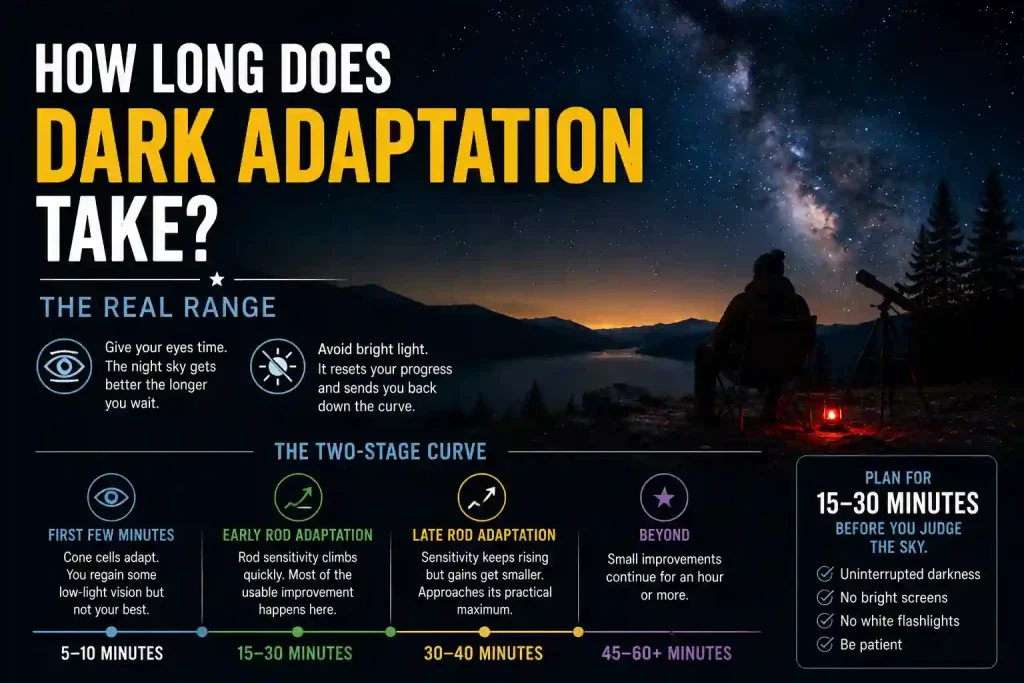
Plan for 15-30 minutes minimum, with gains continuing longer. The sourced range, the two-stage rod/cone curve, and why every site’s number is a little different.
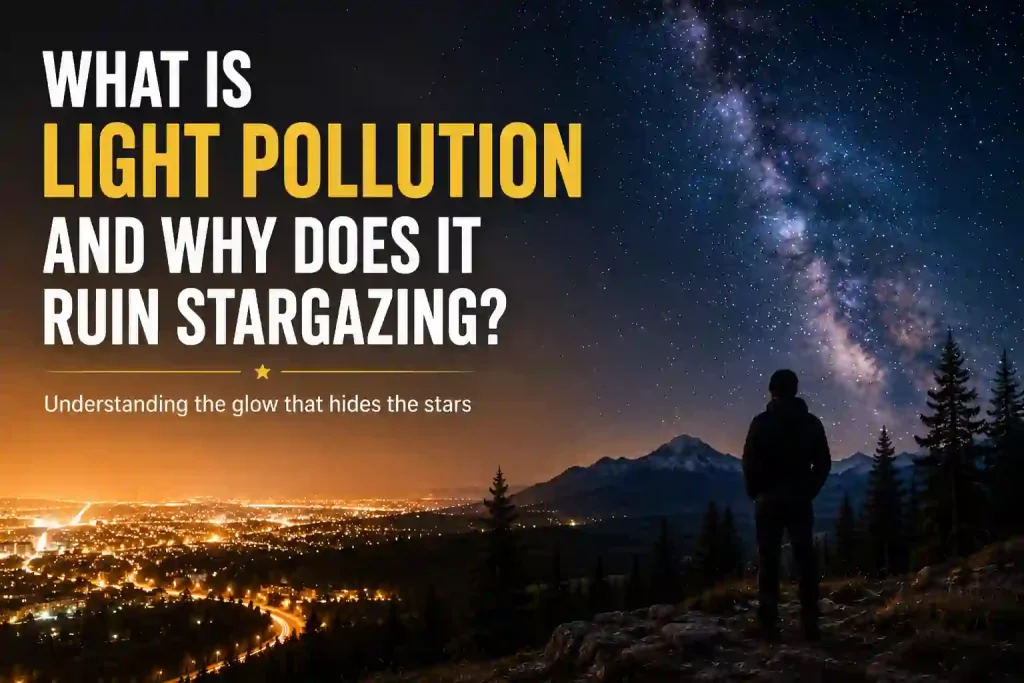
The four types of light pollution, what each one costs a stargazer, and how to find out how bad it is where you live.
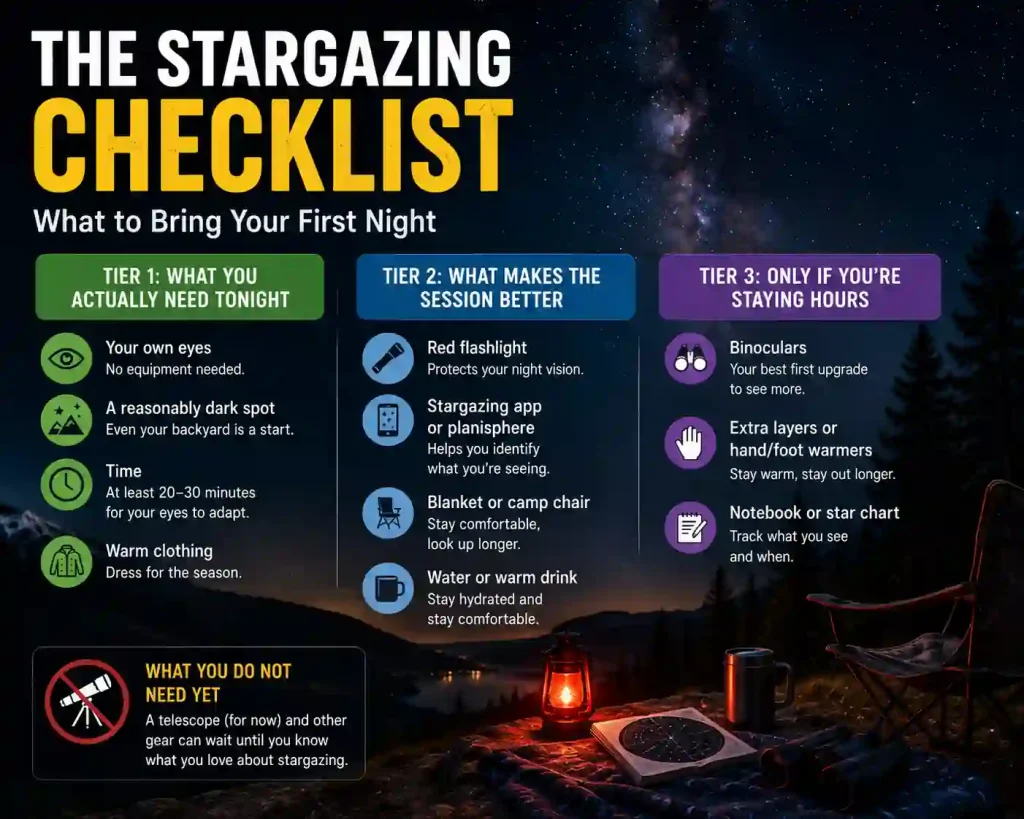
A tiered checklist for your first stargazing session: what you actually need tonight, what makes it better, and what to skip until you’re hooked.
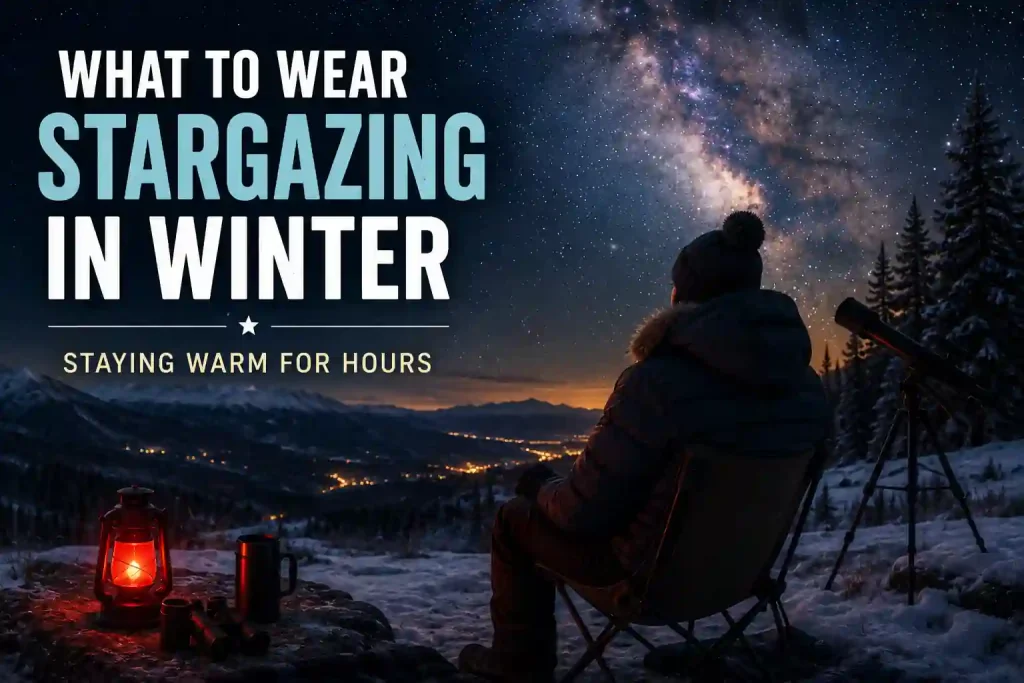
Standing still under a winter sky is colder than walking or hiking. Here’s the layering system and warning signs that actually keep you out longer.
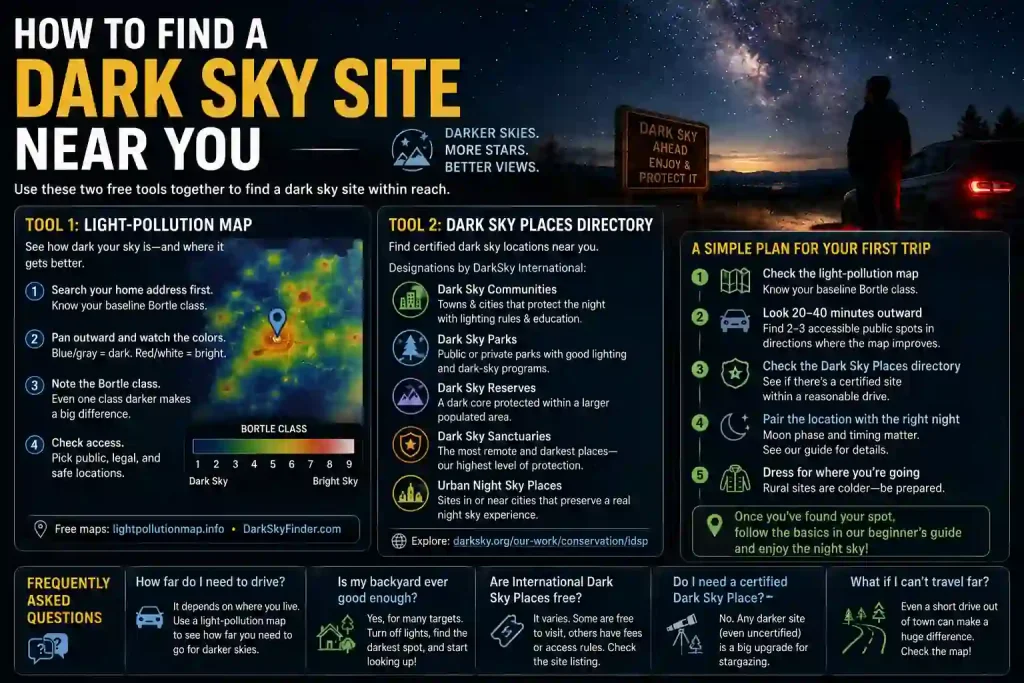
Use a free light-pollution map and the official Dark Sky Places directory to find a genuinely dark spot near you, no wilderness trip required.
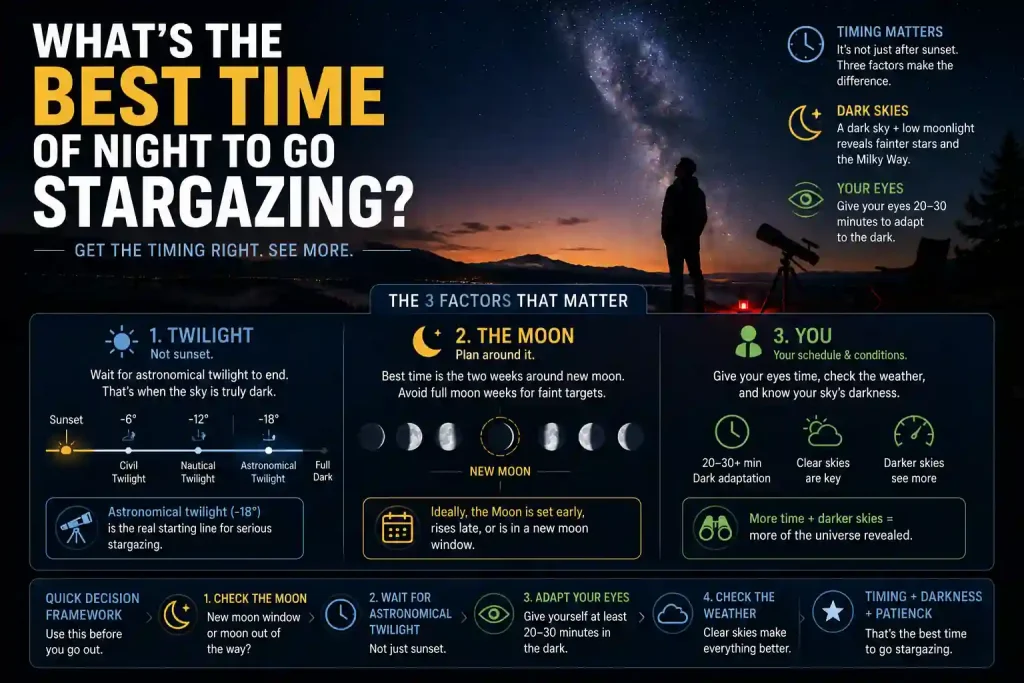
The best time to stargaze isn’t just ‘after dark.’ Combine astronomical twilight, moon phase, and your own schedule with this simple framework.
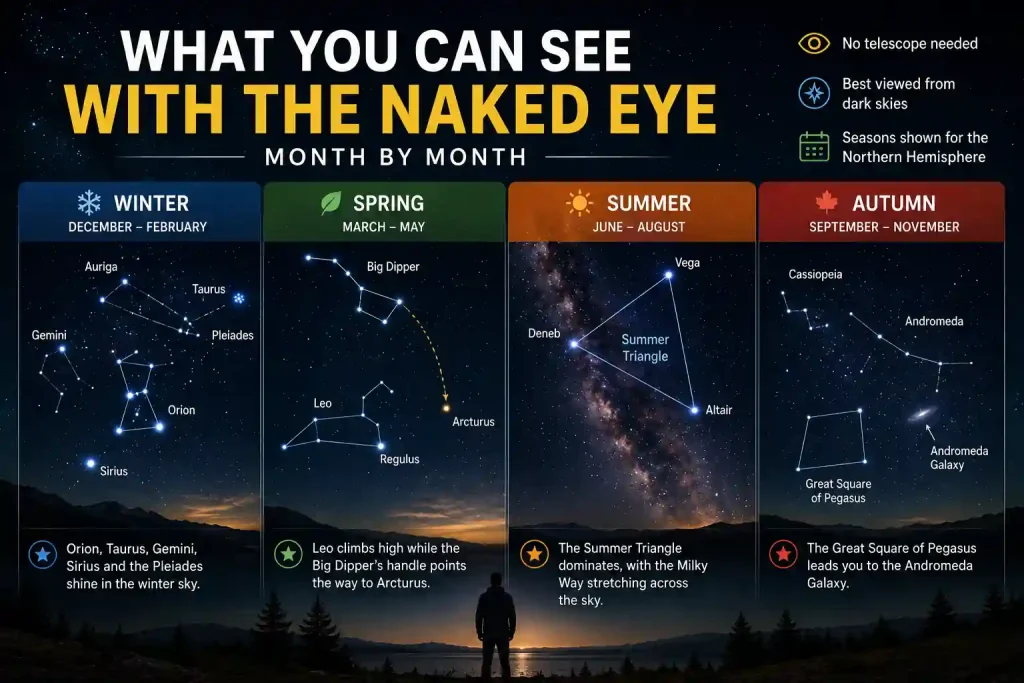
A Northern Hemisphere guide to what’s overhead each season: Orion in winter, Leo in spring, the Summer Triangle, and Andromeda in fall.
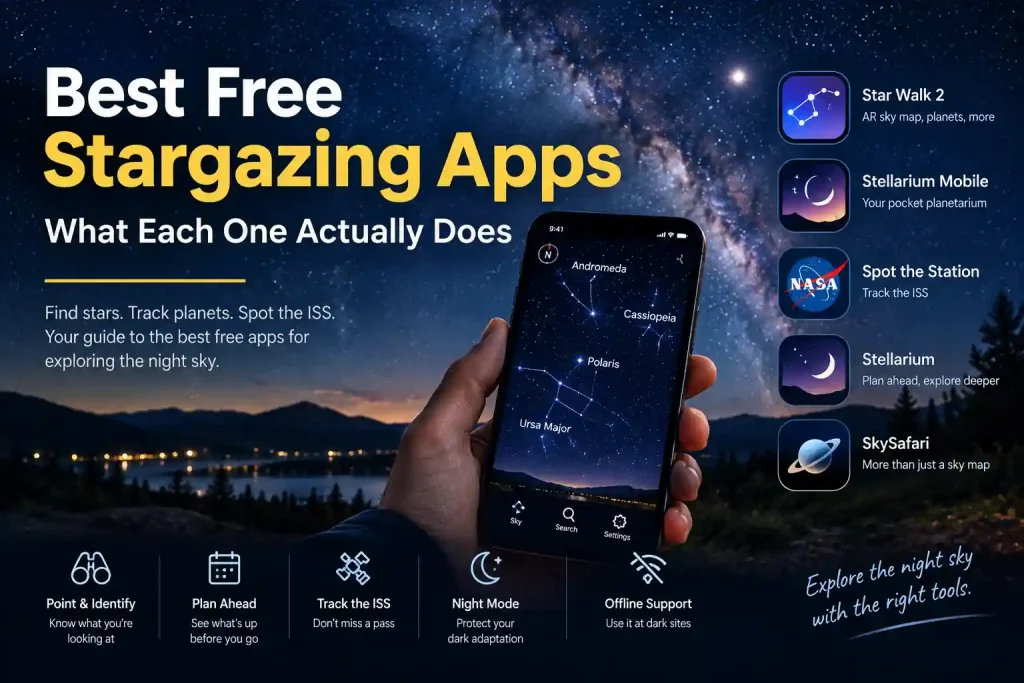
Stellarium, Star Walk 2, SkySafari, and NASA’s own Spot the Station, described from their own documentation, so you can pick the right one tonight.
New to astronomy? A 10×50 is the beginner sweet spot. Learn what the two numbers mean, why 7×50 and 10×50 win, and how to avoid the high-power trap.